PBN links are often sold as a shortcut: cheap, fast backlinks from “high DR” websites that promise quick ranking jumps. The problem is that private blog networks are exactly the kind of manipulation Google’s spam systems are built to detect. When a network is caught, the links can stop counting overnight — and in serious cases, the sites using them can receive a manual action.
This guide explains what a PBN is, how to recognise PBN links before you pay for them, and what to do instead.
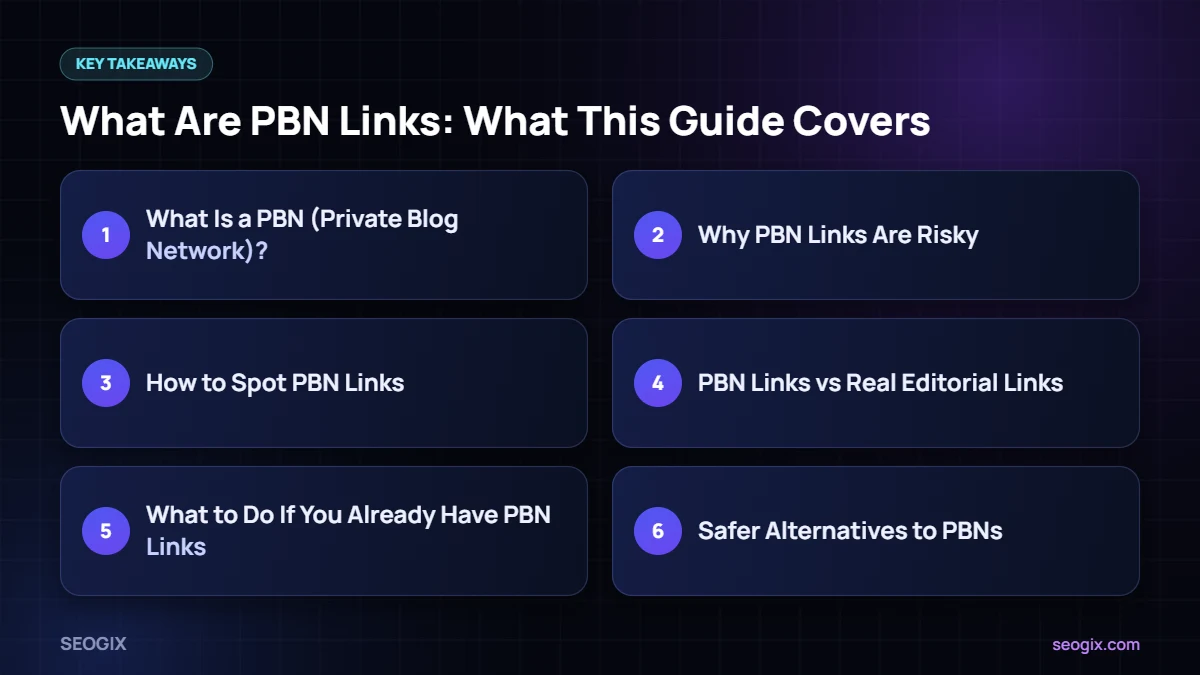
What Is a PBN (Private Blog Network)?
A private blog network is a group of websites controlled by one person or company, created mainly to link to other websites and pass ranking signals. Many PBNs are built on expired domains that once had real backlinks, so they show high authority scores even though they have no real audience today.
The sites in a PBN usually publish thin or generic content, exist mostly to host outbound links, and are often rented out to many different clients at the same time.
Why PBN Links Are Risky
Google’s spam policies describe link schemes as any links intended to manipulate rankings, including buying or selling links that pass ranking credit. A PBN is built for exactly that purpose. The risks include:
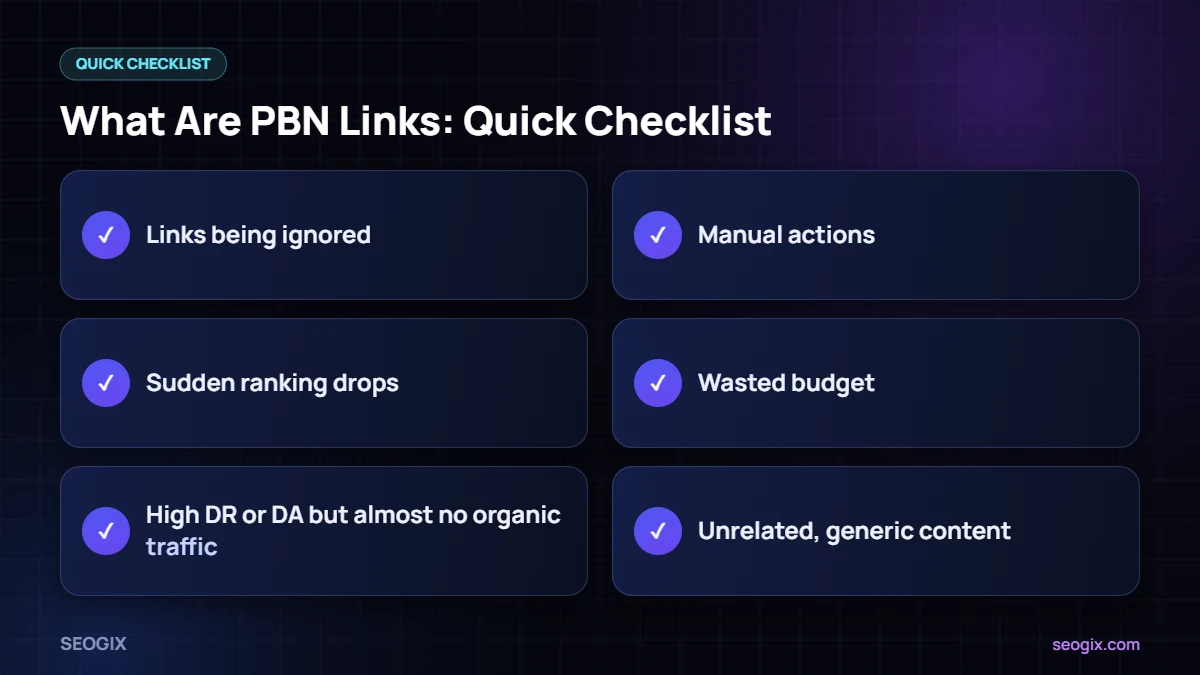
- Links being ignored. Google’s link spam systems can simply neutralise links from networks they identify, so the money and time spent produce nothing.
- Manual actions. If a reviewer finds unnatural links pointing to your site, Search Console can show an “unnatural links” manual action and your rankings can drop.
- Sudden ranking drops. When a network is de-indexed or devalued, every site relying on it can lose rankings at the same time.
- Wasted budget. Rankings built on PBN links are fragile and usually have to be rebuilt with real links later.
How to Spot PBN Links
Many link sellers do not say “PBN”. Use these signs to identify them before you buy:
- High DR or DA but almost no organic traffic. A real DR 60 site normally ranks for something. If traffic is near zero, the authority probably comes from an old domain history.
- Unrelated, generic content. Posts jump between unrelated topics with no clear audience.
- Lots of outbound links to unrelated businesses. Almost every article exists to link out.
- No real “about” information. No authors, no contact details, no social presence, or stock photos everywhere.
- Similar designs and footprints. Several sites share the same theme, hosting, ownership details or writing style.
- Domain history changes. The Wayback Machine shows the domain belonged to a completely different business a few years ago.
- Prices that look too good to be true. Very cheap high-DR dofollow links that go live within a day are a common PBN offer.
You can run a quick first check with our free authority and rank checkers, then confirm traffic and history in a full SEO tool.
PBN Links vs Real Editorial Links
The difference is not the metric — it is whether the site exists for readers. Real editorial links come from websites that have their own audience, publish content for that audience and link to you because your page adds value. Those links are far more durable, send referral traffic and match what Google wants to reward.
What to Do If You Already Have PBN Links
- Stop buying new ones so the problem does not grow.
- Check Search Console under the Manual Actions report. If there is no manual action, Google may already be ignoring those links.
- Ask for removal where you have contact with the seller or site owner.
- Use the disavow tool carefully. Google recommends disavowing only when you have a significant number of spammy or unnatural links and they are causing, or are likely to cause, a manual action.
- Build real links from relevant sites so your rankings no longer depend on the network.
Safer Alternatives to PBNs
- Guest posting on real, relevant blogs with natural anchors.
- Digital PR and expert quotes that earn mentions from news and industry sites.
- Niche edits on existing, traffic-earning articles where your link genuinely fits.
- Listings on reputable directories and communities — see our list of free backlink sites.
Every link SEOGIX builds through our link building service is placed manually on a real website, with no PBNs, and comes with a live URL report so you can verify it yourself.
Frequently Asked Questions
What does PBN stand for?
PBN stands for private blog network — a group of websites owned by one person or company and used mainly to build links to other sites.
Are PBN links against Google’s guidelines?
Yes. Links created mainly to manipulate rankings fall under Google’s link spam policies. PBN links can be ignored by Google’s systems or lead to a manual action.
Can PBN links still work?
They can sometimes move rankings for a while, which is why they are still sold. But the gains are fragile: when the network is detected, the links stop counting and rankings often drop.
How do I check if a link is from a PBN?
Look for high authority with little or no organic traffic, unrelated thin content, heavy outbound linking, missing author or contact information and a domain history that changed owners.
Does SEOGIX use PBNs?
No. SEOGIX builds links manually on real websites and shares every live URL in a report, so you can check each placement yourself.