Local keyword research is the process of finding the exact words nearby customers type into Google when they need your product or service. It is different from general keyword research because location changes everything: someone searching “AC repair” in Karachi expects completely different results from someone searching the same phrase in Dubai.
This guide walks you through local keyword research in seven simple steps, even if you have never used an SEO tool before.
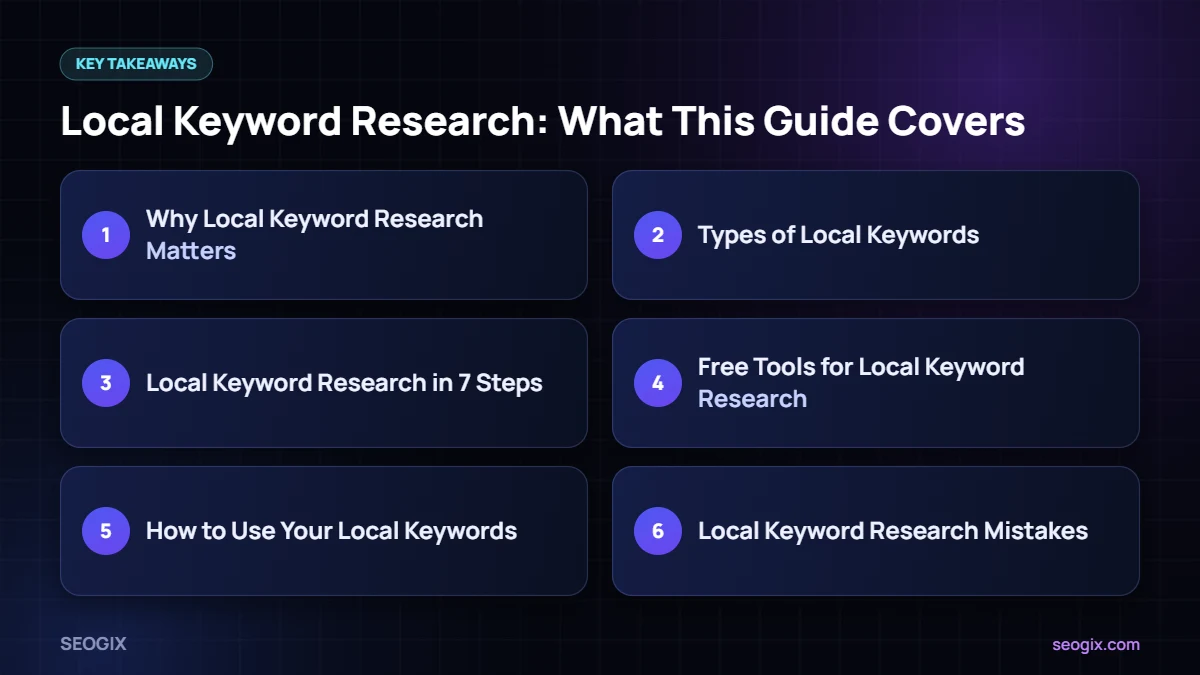
Why Local Keyword Research Matters
Local searchers usually have high intent. They want to call, visit or book soon. If your website and Google Business Profile use the same language they use, you are more relevant for their searches. Good local keyword research also stops you from wasting time on phrases nobody in your area actually searches for.
Types of Local Keywords
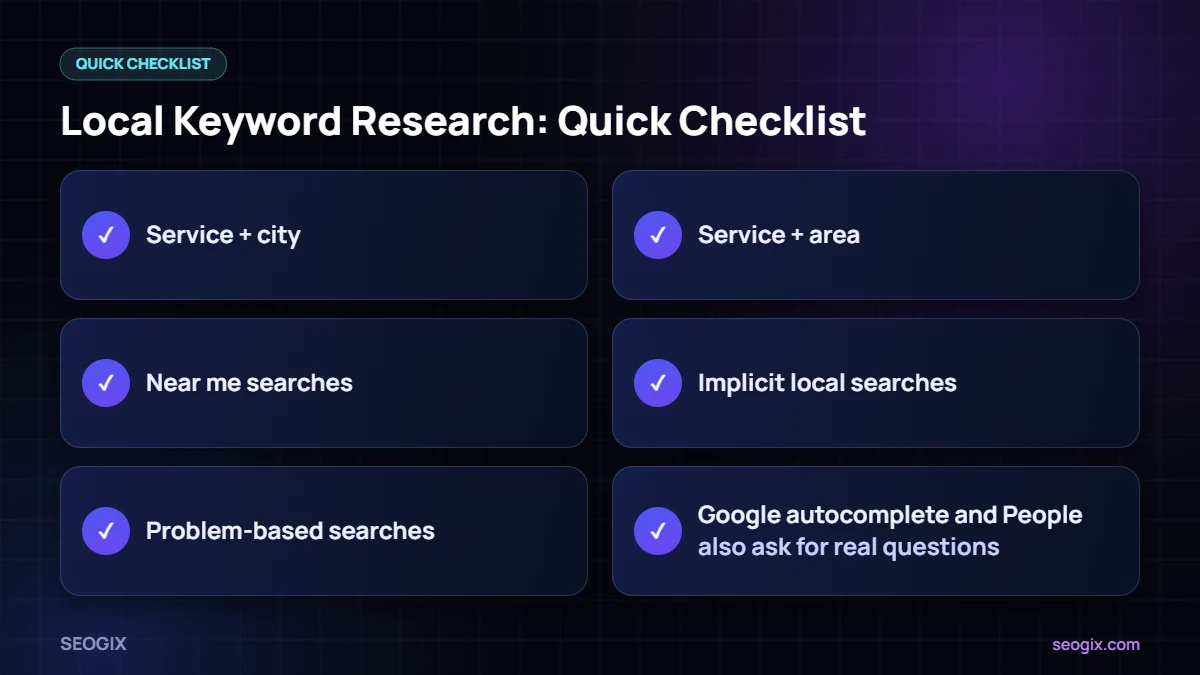
- Service + city: “dentist in Lahore”, “SEO agency Karachi”.
- Service + area: “plumber DHA Phase 6”, “cafe Gulberg”.
- Near me searches: “dentist near me”, “car wash open now”.
- Implicit local searches: “pizza” or “gym” — Google often shows local results even without a place name.
- Problem-based searches: “leaking water heater repair”, “broken phone screen fix”.
Local Keyword Research in 7 Steps
1. List your services
Write down every service you offer, in the words customers use rather than your internal jargon. A dentist might list “teeth whitening”, “root canal”, “braces” and “emergency dentist”.
2. List your locations
Add your city, nearby towns and the neighbourhoods you serve. For a service-area business, include every area you genuinely cover.
3. Combine services and locations
Create a simple list of service + location combinations. This becomes your starting list for local keyword research.
4. Use Google autocomplete and related searches
Type your main service into Google and note the suggestions. Scroll to the bottom for “related searches” and check the “People also ask” questions. These show real phrases people use.
5. Check search volume
Use a tool such as Google Keyword Planner, Ahrefs or Semrush and set the location to your country or city. Volumes for local terms are often small — that is normal. A keyword with 30 searches a month can still bring valuable customers.
6. Look at the results page
Search each keyword yourself. If you see a map pack, it has local intent. If you see only national guides, the keyword may be informational. This step tells you whether to target the keyword with your Google Business Profile, a service page or a blog post.
7. Map keywords to pages
Assign each group of keywords to one page. Your homepage and main service pages usually target the broadest service + city terms, location pages target specific areas, and blog posts target questions.
Free Tools for Local Keyword Research
- Google autocomplete and People also ask for real questions.
- Google Keyword Planner for search volume ranges with location filters.
- Google Search Console to see which local terms already bring impressions to your site.
- Google Business Profile performance to see the searches that showed your profile.
Google’s Keyword Planner help explains how to set locations for more accurate estimates.
How to Use Your Local Keywords
- Use the main keyword in the page title, H1 and first paragraph.
- Mention the area naturally in headings and body text.
- Add genuinely local details: landmarks, areas served, local photos and case studies.
- Use the same language in your Google Business Profile services and description.
- Answer local questions in FAQs on the relevant page.
Avoid stuffing city names into every sentence. Write naturally for local customers and the relevance will follow.
Local Keyword Research Mistakes
- Targeting only “near me” terms and ignoring service + city keywords.
- Creating dozens of near-identical pages for every small town.
- Choosing keywords only by volume instead of intent.
- Forgetting the language and spelling your customers actually use.
Turn Keywords Into Rankings
Once your local keyword research is done, use our local SEO checklist to optimise your profile and website, or ask our local SEO team to build the strategy for you.
Frequently Asked Questions
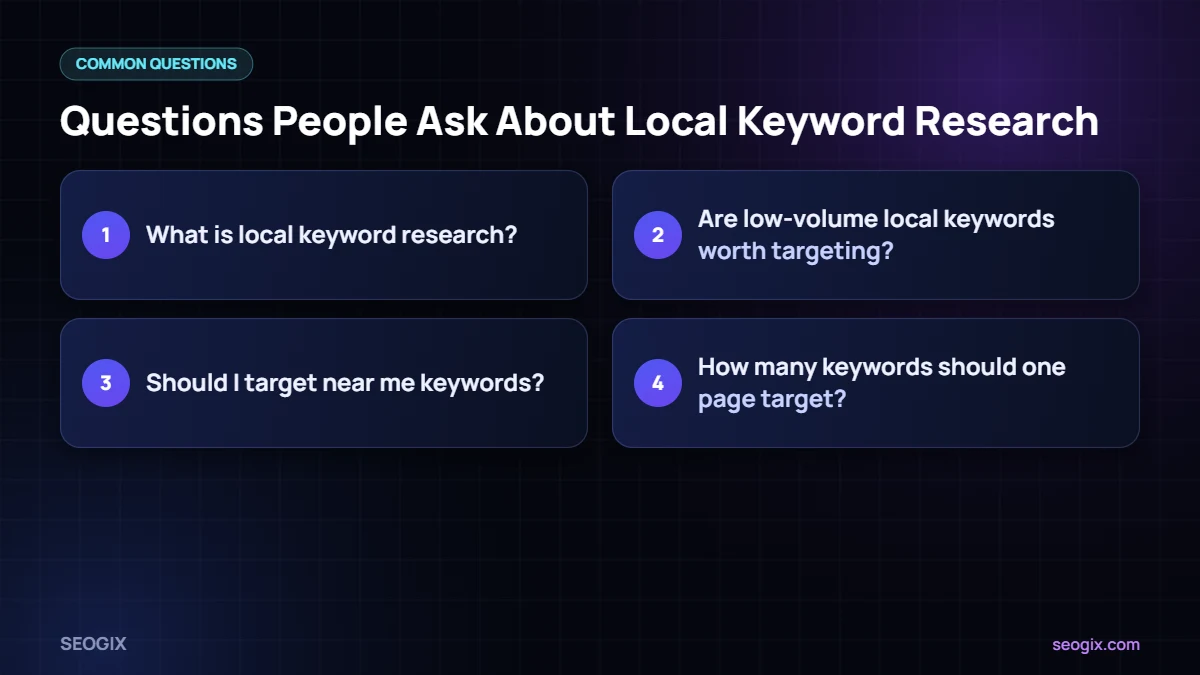
What is local keyword research?
It is the process of finding the words and phrases people in a specific area use to search for products or services, so you can target them on your website and Google Business Profile.
Are low-volume local keywords worth targeting?
Yes. Local keywords often have small volumes but high intent. A handful of searches from people ready to buy can be very valuable.
Should I target near me keywords?
You can include the idea naturally, but Google already understands location. Focus on relevance, a strong profile and service + city keywords rather than writing “near me” repeatedly.
How many keywords should one page target?
One main keyword and a group of close variations or related questions. Different services or locations usually need separate pages.