As AI makes it easy to publish thousands of words in seconds, the thing that sets content apart is no longer volume. It is proof that a real person with real experience stands behind it. That is what E-E-A-T is about: experience, expertise, authoritativeness and trustworthiness.
This guide explains E-E-A-T in simple terms and nine practical ways to show it on your website.
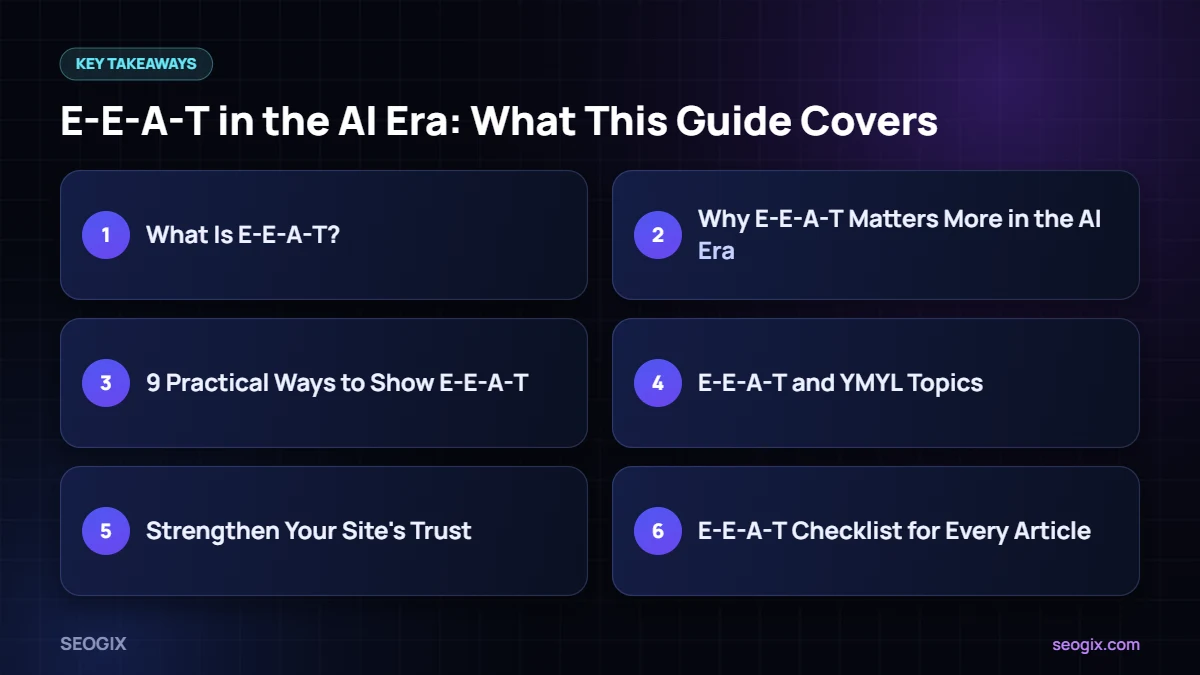
What Is E-E-A-T?
E-E-A-T comes from Google’s Search Quality Rater Guidelines, which human raters use to evaluate search results. It is not a single ranking factor or score, but it describes the qualities Google’s systems aim to reward. Google explains this in its guide to creating helpful, reliable, people-first content.
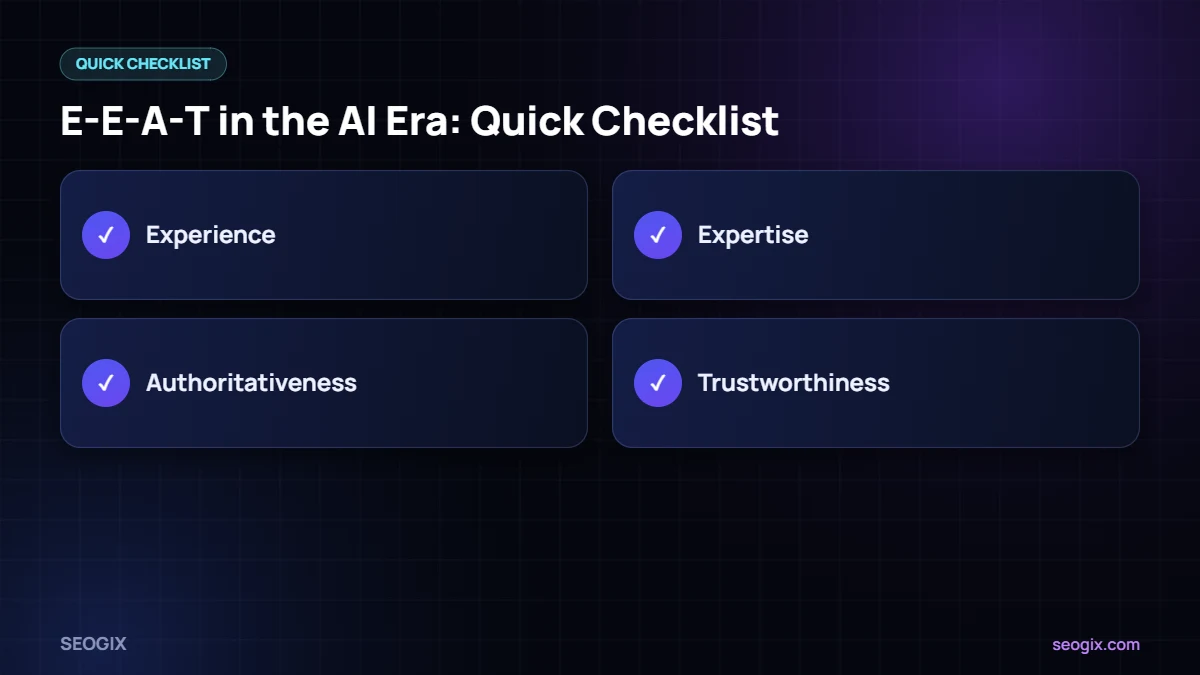
- Experience: first-hand experience with the topic, such as actually using a product or doing the work.
- Expertise: knowledge and skill in the subject.
- Authoritativeness: being a recognised, go-to source.
- Trustworthiness: accuracy, honesty and safety. Google calls trust the most important part.
Why E-E-A-T Matters More in the AI Era
AI can summarise what is already online, but it cannot show that you fixed this exact problem for a real client last month. When many pages say the same thing, signs of genuine experience and trust help both readers and search systems decide who to rely on.
9 Practical Ways to Show E-E-A-T
1. Add real author information
Show who wrote each article, with a short bio, credentials and a link to an author page.
2. Share first-hand experience
Use phrases and details that only someone who did the work would know: results, screenshots, photos, mistakes and lessons learned.
3. Show your process
Explain how you tested, reviewed or researched something.
4. Cite trustworthy sources
Link to primary sources for facts, laws, statistics and official guidance.
5. Keep content up to date
Show “last updated” dates on important articles and actually update them.
6. Make it easy to contact you
Clear contact details, an address where relevant and a real About page all support trust.
7. Collect genuine reviews
Reviews on Google and independent platforms show real customer experiences.
8. Earn mentions and links
Being referenced by respected sites in your field builds authority. Our guest posting guide and link building service focus on genuine, relevant placements.
9. Be transparent
Disclose affiliate links, sponsorships and how AI is used in your content process where readers would expect to know.
E-E-A-T and YMYL Topics
For “Your Money or Your Life” topics — health, finance, legal and safety — Google’s raters apply higher standards. Content on these topics should be written or reviewed by qualified people.
Strengthen Your Site’s Trust
Strong E-E-A-T is built over time through real work, honest content and a good reputation. Read our guide on AI content and Google, or talk to our team about expert-led content.
E-E-A-T Checklist for Every Article
- Is the author named, with a short bio and relevant credentials?
- Does the article include at least one real example, photo, result or lesson from first-hand experience?
- Are facts, figures and legal or medical statements linked to reliable sources?
- Is there a visible “last updated” date, and is the content actually current?
- Would a reader know how to contact the business behind the article?
- Are any affiliate links, sponsorships or AI assistance disclosed where relevant?
If an article fails more than one of these checks, it is worth improving before you publish it. Over time, a library of articles that pass this checklist builds a reputation that both people and search systems recognise. That reputation is hard for competitors to copy, which is exactly why it matters so much when anyone can generate generic text in seconds.
Frequently Asked Questions
Is E-E-A-T a ranking factor?
Not a single ranking factor. It describes qualities Google’s systems aim to reward, as reflected in its quality rater guidelines.
What does the extra E stand for?
Experience. Google added it in 2022 to highlight the value of first-hand experience.
Can AI content have good E-E-A-T?
It can if a real expert reviews it, adds genuine experience and checks accuracy. AI alone cannot provide first-hand experience.
How do I show experience on a service page?
Add case studies, real photos, results, client reviews and details about the team doing the work.